Did Apple Raise Prices in 2026? What Went Up and How to Beat It
Jul 23, 2026 · AppleBitcoin
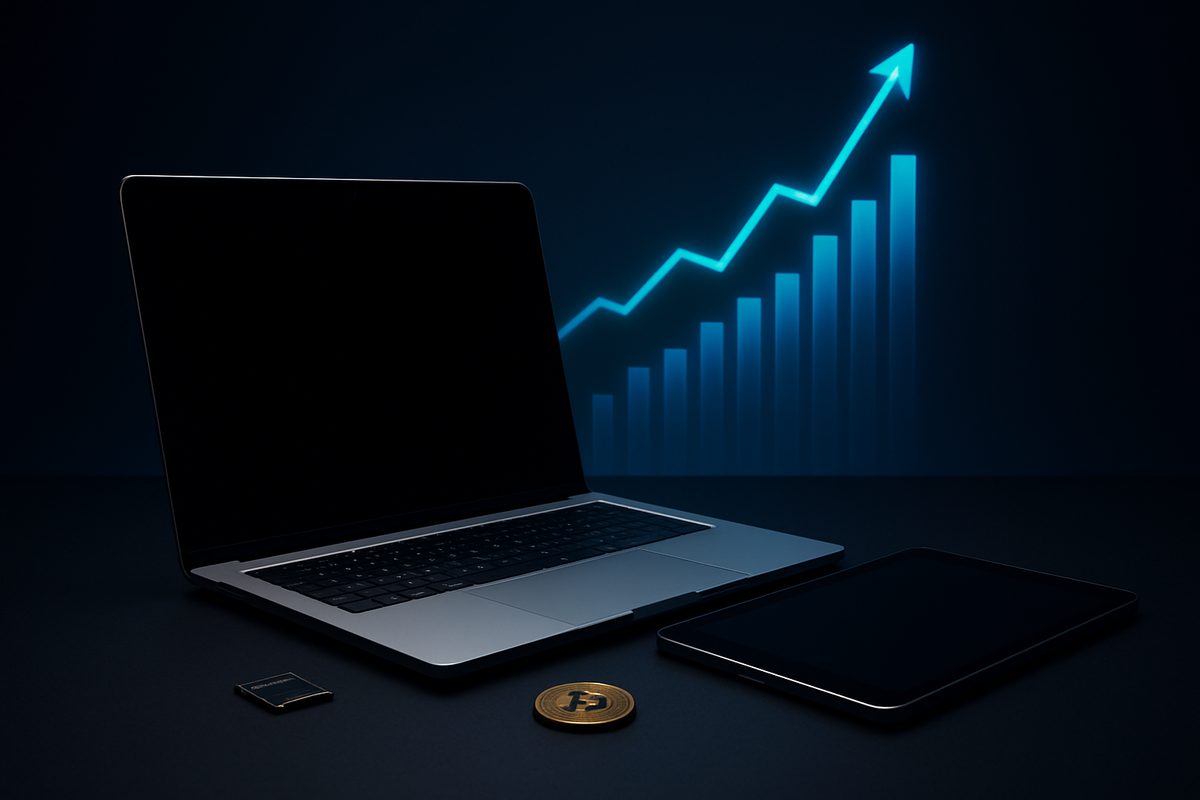
If your new MacBook feels more expensive than last year's, you're not imagining it. On June 25, 2026, Apple did something it rarely does out of cycle: it raised prices across the Mac and iPad lineups — some by as much as 18%. A base MacBook Pro that cost $1,699 now starts at $1,999. The MacBook Air jumped $200. Nearly every iPad went up $100 to $200.
The obvious question is why — and, if you're about to spend a four-figure sum, how to avoid paying the full increase. Here's exactly what changed, the real reason behind it (it's not what most people assume), and the practical ways to beat it in 2026.
What Apple actually raised — the exact numbers
The June 2026 round hit Macs and iPads. iPhone, Apple Watch, and AirPods were left untouched. These are the confirmed US price changes:
| Product | Old price | New price | Change |
|---|---|---|---|
| MacBook Air (base) | $1,099 | $1,299 | +$200 (~18%) |
| MacBook Pro (base) | $1,699 | $1,999 | +$300 (~18%) |
| iPad (base) | $349 | $449 | +$100 |
| iPad mini | $499 | $599 | +$100 |
| iPad Air | $599 | $749 | +$150 |
| iPad Pro | $999 | $1,199 | +$200 |
Apple even raised prices on its refurbished Macs and iPads to match, adding roughly $160–$180 on average. In other words, this wasn't a repricing of one flagship — it was a broad reset across two entire product categories.
The reason isn't tariffs. It's memory.
Most people assume "Apple price increase" means tariffs. That was the story in 2025 — and Apple largely dodged it. This time the cause is completely different, and Apple said so directly: a severe global shortage of DRAM and NAND memory chips.
Here's what happened. The AI boom created insatiable demand for high-bandwidth memory (HBM) to feed data centers. Memory makers — Samsung, SK Hynix, Micron — redirected their production toward HBM because it carries three-to-five times higher margins. That starved the ordinary DRAM and NAND supply that goes into laptops, tablets, and phones, and prices spiked. Contract DRAM prices rose roughly 80–95% in the first quarter of 2026 alone, with analysts projecting another 58–63% jump in the second quarter.
Every Mac and iPad ships with memory and storage inside. When those components suddenly cost far more, Apple's choices were to eat the cost or pass it on. This time it passed a chunk of it on. Tim Cook, who almost never frames a price hike as forced, called the memory shortage a "hundred-year flood" and said the increases were "unavoidable," adding: "I've never seen anything like it in any area in over 40 years."
Why the iPhone was spared (for now)
Notice what didn't change: the iPhone. That's not luck. When the iPhone 17 launched in September 2025, Apple held the base model at $799 — the same as the iPhone 16 — and actually doubled the base storage from 128GB to 256GB, effectively giving buyers more for the same money. The Pro stayed at $1,099 and the Pro Max at $1,199. The carried-over iPhone 16 even dropped $100 to $699.
Apple absorbed the pressure on iPhones the same way it dodged tariffs in 2025: by stockpiling US inventory ahead of time, shifting US-bound iPhone assembly to India (which faced a lower tariff than China), and benefiting from a smartphone tariff exemption. The Mac and iPad lines didn't have the same cushions when the memory crunch hit, so they took the increase instead.
Is the iPhone 18 going to cost more?
This is where confirmed fact ends and forecast begins. As of July 2026, Apple has not announced any iPhone 18 pricing. But analysts widely expect an increase when it launches, likely in September 2026, precisely because the same memory crunch will hit phones next.
The estimates vary wildly — from around $50 (JPMorgan) to as much as $270 (TechInsights) on the Pro models, with a rough consensus of $100–$200. One analysis pegged the DRAM cost inside a Pro iPhone rising from about $39 in the iPhone 17 Pro to roughly $145 in the iPhone 18 Pro — a 272% jump in that one component alone. Treat all of this as informed speculation, not confirmation. But if you've been eyeing a new iPhone, the risk clearly points toward higher, not lower, prices.
How to beat the 2026 price increase
Higher list prices don't mean you have to pay them. Here are the levers that genuinely work right now:
Buy the prior generation. The single easiest win. The iPhone 16 sits at $699 — a full $100 below where it launched — and prior-gen Macs and iPads linger at resellers well after a refresh. You lose very little and save real money.
Use education pricing if you qualify. Students, parents buying for them, and teachers get roughly $100 off Macs and $50 off iPads through Apple's Education Store, plus periodic Back to School gift-card promos. It's a standing discount that partly cancels the increase. Full details in our student and education discount guide.
Go Certified Refurbished. Apple's refurbished store runs up to ~15% off with a full one-year warranty and a new battery and shell on iPhones and iPads — often landing below even the education price. We cover exactly when it's the best value in is Apple Certified Refurbished worth it.
Trade in your old device. Apple Trade-In knocks the value of your current phone, tablet, or Mac straight off the new one. See what your device is worth in our 2026 trade-in values guide.
Shop authorized resellers. Amazon, Best Buy, and Costco discount Apple gear all year — and unlike Apple, they cut the actual price. Since Apple itself almost never marks anything down (more on that in does Apple ever go on sale), this is where the real deals live.
Mind how you pay. On a $1,000+ purchase, financing interest, card surcharges, and currency-conversion fees quietly inflate the total. Paying with crypto avoids interest and conversion fees entirely — we ran the side-by-side in crypto vs Apple financing.
The bigger picture
The 2026 increase is a reminder that Apple's prices are tied to a supply chain most shoppers never see. This round it was memory; next time it could be tariffs or something else entirely. The takeaway isn't to panic-buy before the next hike — it's to stop defaulting to full price. Between prior-gen models, refurbished stock, education pricing, trade-ins, and reseller deals, a determined buyer can usually claw back most or all of a $200–$300 increase.
At AppleBitcoin you can buy genuine, sealed Apple products and pay in Bitcoin or another cryptocurrency — no financing, no conversion fees, free insured shipping, and full Apple warranty on every device. When list prices climb, the smartest response is to control every other variable you can.
Frequently asked questions
Did Apple raise iPhone prices in 2026?
Not as of July 2026. The iPhone lineup was untouched in the June 2026 price round, and the iPhone 17 launched in September 2025 at the same $799 base as the iPhone 16 while doubling the base storage. Analysts forecast a possible iPhone 18 increase in September 2026, but Apple has not confirmed it.
What did Apple actually raise prices on in 2026?
Macs and iPads, announced June 25, 2026. The MacBook Air rose $200 to $1,299, the MacBook Pro rose $300 to $1,999, and iPads went up $100 to $200 depending on the model. Apple also raised its refurbished Mac and iPad prices to match.
Why did Apple raise prices in 2026?
A severe global shortage of DRAM and NAND memory chips, driven by AI data centers buying up high-bandwidth memory. Tim Cook called it a "hundred-year flood" and said the increases were "unavoidable." Unlike the 2025 concern, this round was about component costs, not tariffs.
Weren't tariffs supposed to raise iPhone prices?
That was the 2025 worry — tariffs could have added hundreds of dollars per device. Apple largely absorbed the hit by stockpiling US inventory, shifting US-bound iPhone assembly to India (a lower tariff than China), and benefiting from a smartphone tariff exemption, so iPhone prices held steady.
How can I avoid paying more for Apple products in 2026?
Buy a prior-generation model such as the discounted iPhone 16 at $699, use Apple's education store if you qualify (about $100 off Macs and $50 off iPads), choose Certified Refurbished for up to 15% off with a full warranty, trade in an old device for credit, and compare authorized resellers like Amazon and Best Buy. How you pay matters too — crypto avoids financing interest and conversion fees.
Ready to buy Apple with crypto?
Genuine, sealed Apple products. Pay in Bitcoin, Ethereum or stablecoins.
Shop now